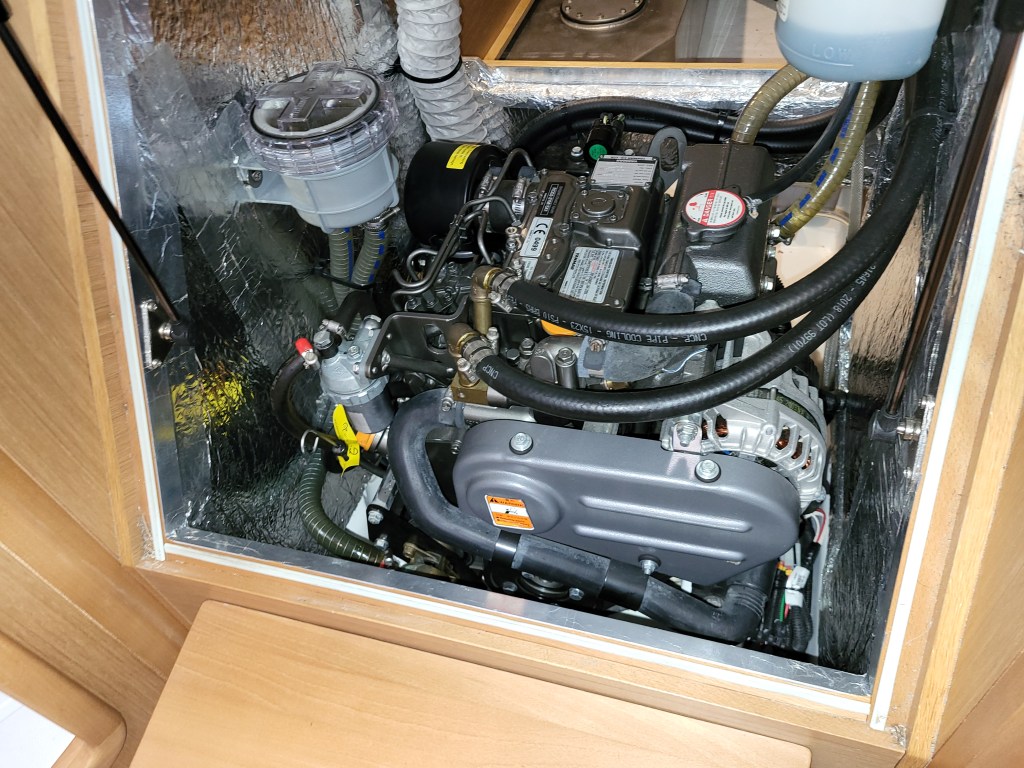
Tis the season for autumn maintenance! I was so prepared with 3 purchasing lists for items purchased from 3 different stores. Then I had a step by step instruction list that I wrote pulling from previous experience and articles from Practical Boat Owner and elsewhere.
But even with the diapers and puppy pads some diesel escaped. And I had the wrong size oil filter (too small). Plus the strap wrench we definitely had on board, was not on board.
The process of the project is always part of this journey. The oil and secondary fuel filter change was a success. Learned that we need an impeller removal tool and if you don’t close that engine seacock water will just keep coming when you open that impeller.
Also learned that you don’t put your lovely navy and white rain jacket on until you are 100% done. Not 90% bc in that last 10% you will get an oil stain on the white part of your jacket. And it will not come out. And even cleaning up the smallest bit of diesel mixed with water will cause some major nausea for me!
U2 kept popping into my head with their Stuck In A Moment song. Even after finishing the jobs my mind was still in the engine! Have you ever been stuck in an engine and couldn’t get out of it?
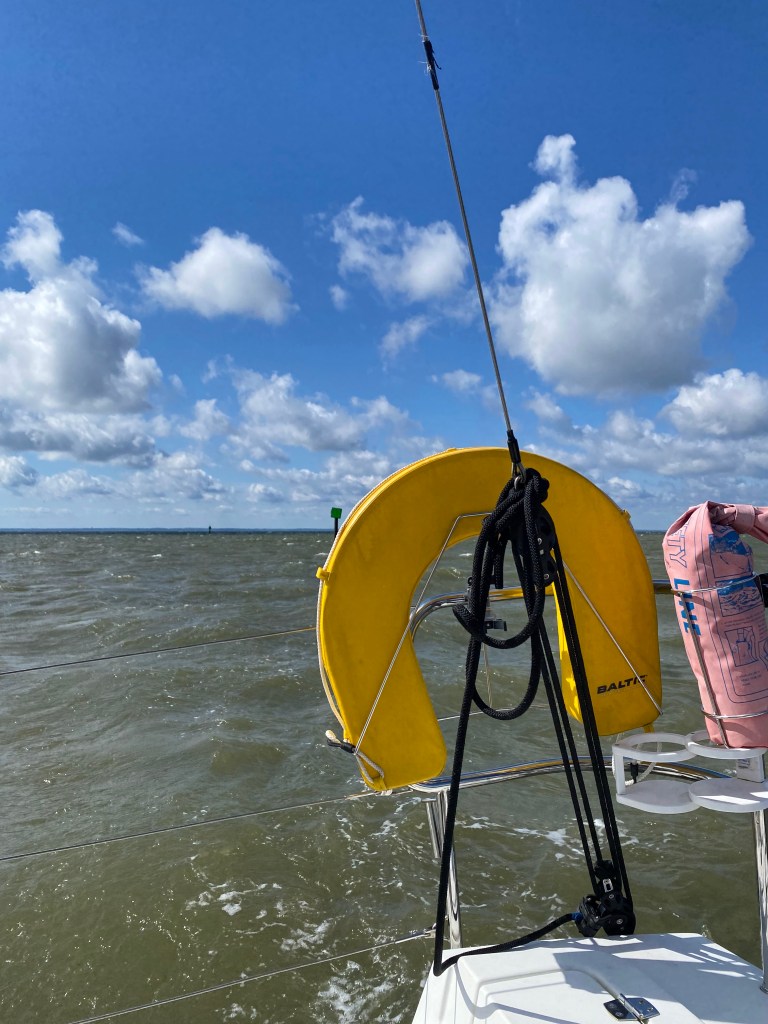
Windy October cruise across the bay to Knapps Narrows
It’s now November and the leaves are gorgeous reds, and yellows as my thoughts turn towards winterizing the boat. This means I’m making lists and finding lists and wondering where did I put those lists from last year. Then I realized that I never wrote those anchoring notes after the last overnight cruise in October.
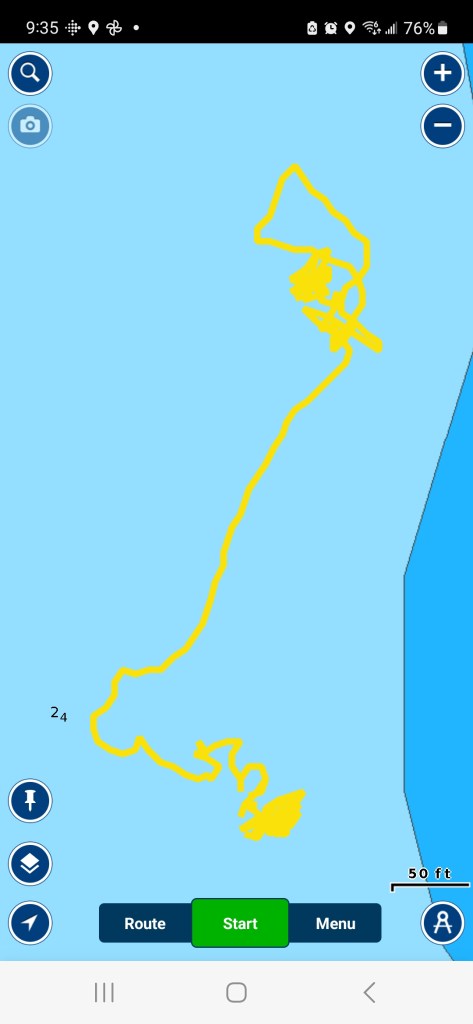
We had gone out for a beautiful and sporty women’s overnight sail with no shortage of northwest wind continuing in the anchorage overnight. We dragged multiple times, and I realized I needed to review and figure out what could have gone better so that the next overnight would result in more sleep. That was the first time that I had a fitful night at anchor with very little shuteye. I was checking anchor drag every hour and a half and we did indeed slowly drag through the night and then in the morning we started dragging a bit quicker. So not only did we have to pull up our first anchor that we had set upon afternoon arrival, by the time we pulled it, our surroundings were pitch black. Then we also had to depart in the morning a bit sooner than planned, pulling up from our second anchorage due to dragging again.
The lack of sleep and stressful experience motivated me to have a good 30-45 minute conversation with my anchoring mentor the next evening to figure out what had gone wrong. We determined that it was likely the same error made twice but not as badly the second time since it held for much longer. The first time I believe we wrapped a lot of chain and never set. The second time I believe we had too much chain on top of the anchor as well. I think it did set but could have had one wrap around the bottom so that when the wind shifted a bit in the early morning the anchor came loose. We also determined that one of the reasons for the piling chain was the very shallow depth of the anchorage. It was 7 feet and Blue Dolphin has a 6 foot draft.
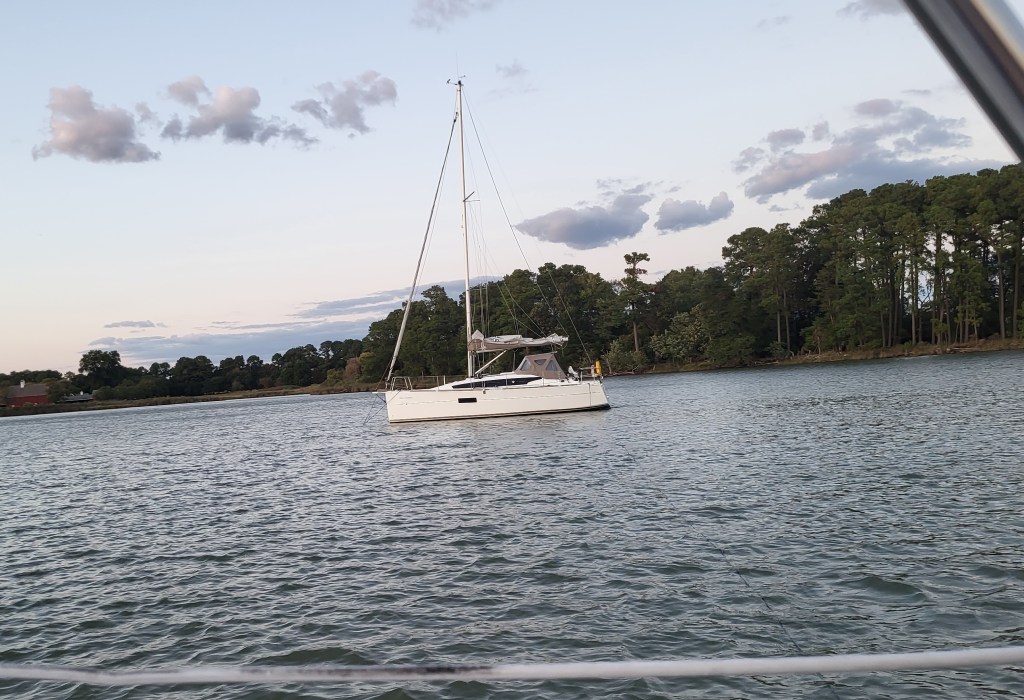
Blue Dolphin secure in the anchorage… or so I thought!
In shallow water, the anchor gets to the bottom lickety split, so there is a need to slow things down, otherwise you are just piling up chain on top of the anchor and possibly behind it. That piled chain can wrap around the anchor and prevent it from setting. So the advice I got is to practice the anchoring yourself without assistance, because then you realize that you do have some time to slow things down. Even when it is very windy, instead of reversing to a stop you can be walking to the front of the boat after you put the boat in neutral and the wind will blow it so you are no longer moving forward. The goal is to quickly get the anchor to the bottom, then go slow. In 7 feet of water the anchor will be at the bottom very quickly, and then you need to slowly pay out the chain as the boat gets moved backward thereby avoiding chain pileups. Then after this slow process, you want to really reverse down on the anchor – 1500 rpm to ensure that it is set. This also ensures that you will sleep well. I was also thinking that maybe I need and additional chain marker at 2.5 meters as right now I have every 5 meters.
Shows both anchoring locations. By morning we were getting pretty close to the dark blue shallows.
Since I was not able to get back out this season for an overnight anchor, I realized that I needed to write down what I had learned and write myself some anchoring notes to refer to next time. I find these written notes and checklists super handy plus I’m one of those people that learns through writing things down.
Anchoring notes:
Throttle forward into the wind.
Neutral to come to a stop and the pace will depend on the wind.
Let out the anchor chain somewhat quickly going straight down to ensure the anchor is on bottom, checking the chain markings.
Once it is on bottom you want to slowly pay out chain as boat moves backwards so that you have a nice angle going from the windlass to the anchor.
Keep letting out chain slowly until you have the desired amount, or the desired amount less the amount you need for your snubber.
 Sails and Sunsets